

The progress of human civilization is fundamentally tied to our ability to learn, adapt, and create. Throughout history, the most significant leaps in technology, social structure, and economic prosperity have been driven by an underlying synergy between educational systems and the spirit of innovation. Education does more than just transmit existing knowledge to the next generation. It provides the cognitive framework, the analytical tools, and the creative confidence necessary for individuals to look at a problem and envision a solution that has never existed before. As the world faces increasingly complex global challenges, the link between robust educational practices and the cultivation of an innovative society has never been more critical.
Cultivating a Growth Mindset in the Classroom
Innovation requires the willingness to fail, iterate, and refine. This is the antithesis of the traditional educational model that often penalizes errors. To foster true innovation, educational environments must shift toward a growth mindset, where challenges are viewed as opportunities for development rather than markers of incompetence. When students are encouraged to experiment and understand that their intellectual capabilities are not fixed, they become more daring in their pursuit of ideas.
This transition requires a curriculum that emphasizes the process of discovery over the acquisition of static facts. By integrating inquiry-based learning, schools help students build the resilience needed to face uncertainty. An innovative thinker is someone who is comfortable with the unknown and possesses the patience to work through the trial-and-error phases of research and development. When education creates a safe harbor for intellectual risk-taking, it prepares students to enter the workforce not just as workers, but as architects of the future.
Critical Thinking as the Bedrock of Invention
True innovation rarely happens in a vacuum. It is usually the result of intense critical thinking—the ability to analyze existing information, identify gaps, and synthesize disparate ideas into a new configuration. Education serves as the training ground for this level of cognitive processing. By exposing students to diverse disciplines, from the humanities to the sciences, educational institutions force the brain to make connections between seemingly unrelated fields.
This interdisciplinary approach is essential for modern innovation. The most groundbreaking solutions often arise when technological tools are applied to social issues, or when artistic perspectives are integrated into engineering. By teaching students to ask why rather than just how, educators empower them to question the status quo. When a student learns to dissect an argument or analyze the functionality of a system, they are learning the mechanics of innovation. They are discovering how to break things down so they can be rebuilt in more efficient, equitable, or creative ways.
Bridging the Gap Between Theory and Practice
A common pitfall in educational systems is the divide between abstract theory and practical application. Innovation thrives at the intersection of these two domains. When students have the opportunity to move out of the classroom and into labs, makerspaces, or community service projects, they witness the limitations of current systems. This experiential learning is the catalyst for invention.
-
Mentorship and Exposure: Connecting students with industry professionals provides them with a clearer understanding of current technological bottlenecks and market needs.
-
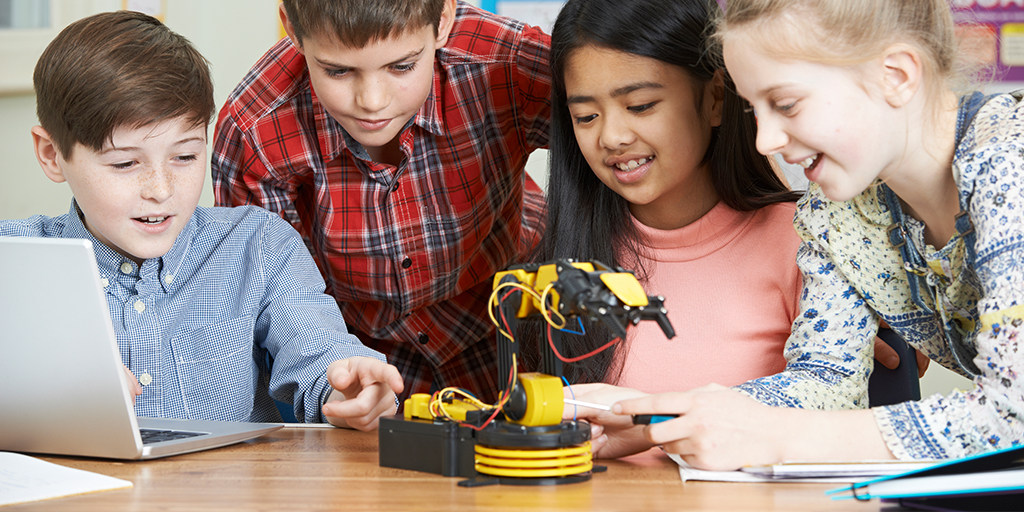
Hands-on Prototyping: Allowing students to build physical or digital models of their ideas teaches them the constraints of materials and logic, which are essential for turning a concept into a viable product.
-
Collaborative Dynamics: Innovation is rarely a solitary endeavor. Group projects teach students how to negotiate ideas, integrate feedback, and work with individuals who possess different skill sets.
By embedding these practical experiences into the educational pipeline, institutions ensure that their graduates are not just conceptually sound, but capable of executing their vision in the real world. This translation of ideas into action is what ultimately drives economic and social advancement.
The Role of Educators as Facilitators of Creativity
For innovation to flourish, the traditional hierarchy of the classroom must evolve. If the teacher is seen as the final arbiter of knowledge, student curiosity is inevitably stifled. The role of the modern educator is to act as a facilitator—someone who provides the resources, poses the right questions, and supports the student through their personal journey of discovery.
Effective educators create a climate where student voice is central. They encourage debates, support unconventional approaches to problem-solving, and treat the classroom as a collaborative studio. This democratic approach to education ensures that innovation is not a top-down mandate but a bottom-up movement driven by the students themselves. When students feel a sense of ownership over their learning, they are more motivated to seek novel solutions to the problems they care about.
Fostering Resilience in a Rapidly Changing World
Innovation is inherently disruptive. It challenges existing norms, market structures, and social habits. Education must therefore prepare students not just to create new things, but to navigate the ripple effects of their innovations. This requires an education that includes ethics, history, and social studies, ensuring that future innovators understand the impact of their work on society.
When education is broad-based, it cultivates a sense of responsibility. An innovative society is only as sustainable as its moral compass. By teaching students to consider the long-term consequences of their actions, institutions ensure that the innovations they produce contribute to the overall well-being of humanity. This holistic approach to learning creates citizens who are capable of driving progress while remaining grounded in the values of empathy and global consciousness.
The Cumulative Impact on Global Progress
The correlation between a nation’s educational quality and its capacity for innovation is well-documented. Economies that invest heavily in research and development, while simultaneously cultivating a highly skilled and creative workforce, consistently outperform those that rely on stagnant models. Education creates the human capital necessary to sustain long-term growth.
As we look toward the future, the integration of new technologies into the classroom—such as artificial intelligence, virtual reality, and collaborative data tools—will further enhance the connection between education and innovation. These tools allow students to simulate complex scenarios, visualize abstract data, and connect with peers across the globe, effectively expanding the playground for their creativity. The synergy between what we learn and what we create is a virtuous cycle that will continue to define the trajectory of progress for generations to come.
Frequently Asked Questions
How can schools encourage innovation without compromising foundational learning?
Foundational knowledge is the building block of innovation. Schools maintain academic rigor by using foundational concepts as the starting point for inquiry. Students are not just asked to memorize facts but to use those facts as tools to explore new scenarios and solve problems, which deepens their understanding of the fundamentals while encouraging original thinking.
What is the impact of arts education on the development of innovative thinking?
Arts education is vital because it teaches students how to interpret the world through multiple lenses. It fosters aesthetic sensitivity, creative expression, and the ability to visualize abstract concepts. These skills are directly transferable to STEM fields, as they allow engineers and scientists to approach complex problems with imagination and a broader perspective.
How do you evaluate or grade innovation in a school setting?
Grading innovation requires shifting from standardized testing to evidence-based portfolios. Teachers assess the process—including the depth of research, the quality of collaboration, the logic of the methodology, and the ability to iterate based on feedback—rather than just the final outcome. This provides a more accurate picture of a student’s innovative capacity.
Is there a danger that a focus on innovation ignores traditional academic values?
Not if implemented correctly. A balanced approach sees innovation as a way to apply, not replace, academic values. By using the scientific method, historical context, and linguistic precision to drive their projects, students actually reinforce their dedication to academic excellence. Innovation provides the context that makes traditional knowledge more meaningful.
How can institutions support innovation for students who do not have access to high-tech equipment?
Innovation is a mindset, not just a collection of tools. Even in under-resourced environments, students can be taught to innovate by identifying local problems and using low-tech or locally sourced materials to develop solutions. The focus remains on critical thinking, observation, and logical problem-solving, which are universal skills that do not require expensive equipment.
What is the connection between lifelong learning and continuous innovation?
Innovation is not a one-time event; it is an ongoing process. Individuals who commit to lifelong learning are better equipped to update their skill sets in response to emerging trends. This prevents intellectual stagnation and ensures that a person remains capable of contributing new ideas long after they have left the formal education system.
How does diversity in the classroom affect the quality of innovation?
Diversity is a key driver of innovation. When students from different cultural, socioeconomic, and intellectual backgrounds collaborate, they bring a wider range of perspectives to the table. This friction of ideas is essential for challenging assumptions and creating products or solutions that are inclusive and effective for a broader range of people.
Comments are closed.